


What Does Ethical Actually Mean in Dog Training?

Is ethical dog training about the methods we use, the labels we wear, or the decisions we make when nobody is watching?
I've described myself as an ethical dog trainer.
There. I've said it. Someone fetch the ceremonial badge.

Except lately, I've been questioning whether I should use the word at all.
Not because I've suddenly stopped caring about dogs. That would be a rather unfortunate career development. It's because the more experience I gain, the more I question what ethical actually means, who gets to define it, and whether calling ourselves ethical tells anyone anything particularly useful about how we work.
I've changed as a trainer. I've learned from other people, reconsidered my decisions and discovered that occasionally I've been wrong.
I know. A dog trainer admitting they've got something wrong. Alert the press.
But that's precisely why I think this is worth discussing.
The dog-training industry seems remarkably fond of labels, tribes and deciding who's on the right side of history. We have trainers who appear to believe that if you use the correct terminology, join the correct group and condemn the correct people, your ethical credentials will practically print themselves.
Meanwhile, there's still a dog at the end of the lead.
And that dog couldn't give a toss what your Instagram bio says.
Welcome to the tribe
Dog training has more labels than a supermarket wine aisle.
Force-free. Positive reinforcement. Science-based. Balanced. Ethical.
Pick your team. Learn the language. Acquire the appropriate moral superiority. Then spend an unreasonable amount of time explaining why the other teams are wrong.
Obviously, I'm exaggerating.
A little.
These labels aren't necessarily useless. They can tell us something about a trainer's philosophy, preferred methods and professional values. It's perfectly reasonable for trainers to have principles and for owners to want to understand them.
The trouble starts when the label becomes a substitute for examining what someone actually does.
A trainer can describe themselves as ethical. Lovely. But what does that tell us about their competence? Their honesty? Their ability to recognise when a dog is struggling? Their willingness to admit they can't help a particular case?
Not a great deal on its own.
I like asking difficult questions, I like chalanging asumtions and I want people to do the same to me. I've received hate online for doing this from force-free, positive reinforcement, science-based and self-described ethical trainers. It's left me increasingly uncomfortable with the idea that I need to belong to a particular camp to prove that I care about dogs.
I'm not interested in changing tribes just because I've become uncomfortable with the one I thought I belonged to. I have enough trouble keeping track of my own opinions without needing a membership handbook.
I want to make the best decisions I can for the dog and its owner. I want to explain why I've made those decisions, recognise when I've got something wrong and change my approach when necessary.
If that doesn't fit neatly into somebody else's definition of ethical, perhaps we need to have a conversation about the definition.
Or perhaps I've got it wrong again.
It's happened before.
Good intentions aren't enough
I believe a dog's health and welfare should be central to everything we do.
That's an easy sentence to write. It looks good on a website, too.
Nobody is likely to advertise themselves as "the trainer who isn't particularly bothered about your dog's welfare". Although, given some of the things I've seen, perhaps honesty in marketing could use a little more attention.
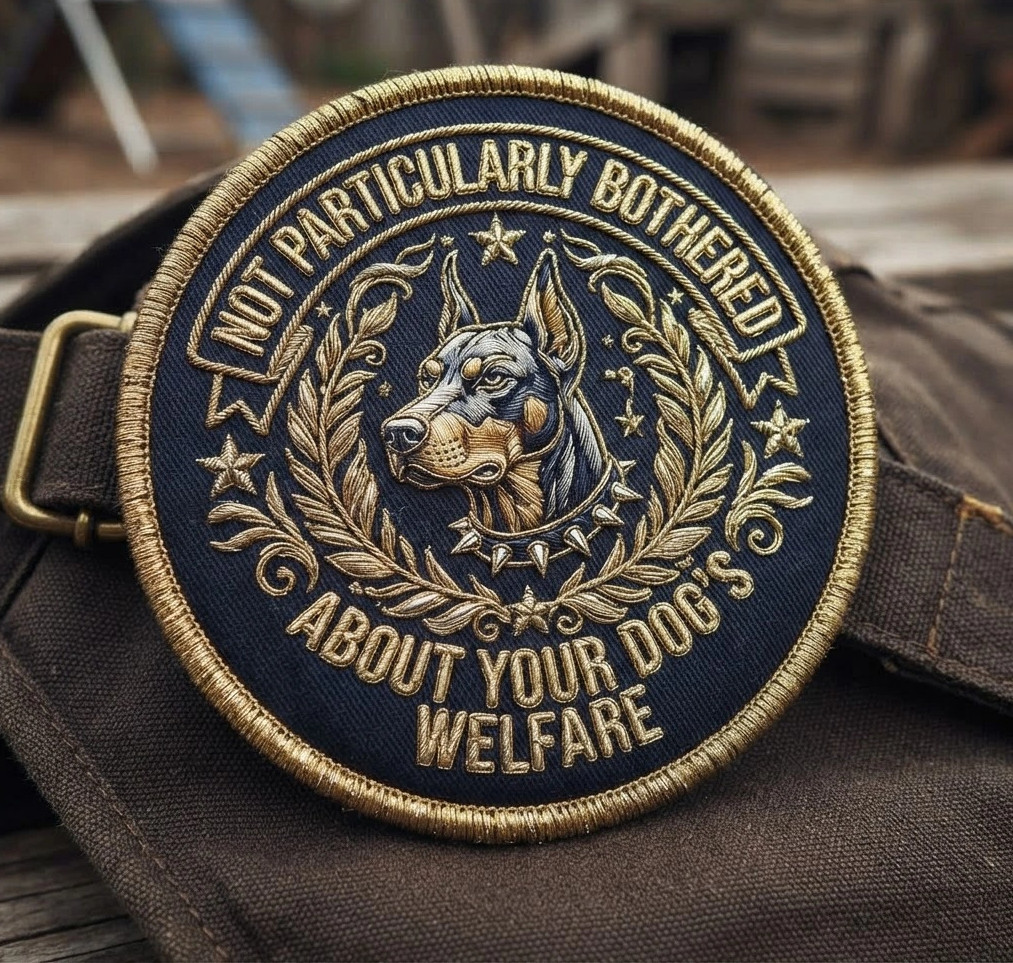
Saying we care about welfare and making decisions that genuinely support it aren't necessarily the same thing.
We can have the best intentions in the world and still make a poor decision. Being convinced we're doing the right thing doesn't magically make us right.
Imagine a trainer chooses a method because they genuinely believe it's in a dog's best interests. The dog becomes more fearful, starts avoiding its owner or develops other behaviours suggesting that something isn't working.
What happens next?
Does the trainer reconsider their approach? Or do they carry on because the method is supposed to work, and therefore the dog must have missed the memo?
For me, that's where ethics starts to become meaningful.
Good intentions don't excuse poor decisions. They should motivate us to make better ones.
If I make a misguided choice, I need to acknowledge it. If my approach isn't helping, I need to adjust it. If I can't help a dog, I need to be honest about that and refer the owner to somebody better suited to the case.
My pride isn't more important than the dog's welfare.
Neither is my preferred training philosophy.
And, rather inconveniently for anyone running a business, neither is my bank balance.
What about corrections?
This is the point where some readers may decide I'm not an ethical trainer and move on to tell everyone about it.
I'll try not to take it personally. I have better things to do with my time.
I don't believe ethical training automatically means never correcting a dog.
I do believe corrections need to be considered carefully. Why are we using one? Is it necessary? Is it appropriate for that individual dog? What are we trying to communicate? What effect is it having?
And, perhaps most importantly, are we correcting a problem we've failed to teach the dog how to handle in the first place?
Ideally, we shouldn't put dogs in situations they're not ready for. We should manage their environment, teach alternative behaviours and build the skills they need before expecting them to cope with difficult situations.
If I'm teaching a dog a reliable recall, I don't want to discover whether it works when the dog is already halfway across a road.
That's not a training plan. That's an expensive way of finding out that your training plan needed more work.
But sometimes things go wrong. A dog may put itself or somebody else in immediate danger, and intervention becomes necessary. In those circumstances, protecting safety takes priority over following a training philosophy to the letter.
That doesn't mean every dangerous situation requires punishment. Sometimes management, physical restraint or interrupting the behaviour is the appropriate response. The objective is safety, not giving the dog a telling-off because we're annoyed that it hasn't read the risk assessment.
There's also a difference between an emergency intervention and deliberately using corrections as a routine training strategy.
I use rewards. I praise dogs. I build relationships, teach skills and try to make working with their owners worthwhile.
I have a vague rule of thumb that I'd like to see at least five instances of praise for every correction. It isn't a scientifically established ratio, and I'm not going to pretend I've discovered the secret mathematical formula for ethical dog training.
It's a reminder to myself that I want the dog's experience to be overwhelmingly positive, rather than dominated by being told what not to do.
Of course, counting five rewards doesn't magically make the sixth interaction acceptable. Ethics isn't a loyalty card. Collect enough stamps and the next correction is free.

We still have to consider the whole picture: the individual dog, the circumstances, the method and its consequences.
I don't use e-collars, and I wouldn't choose to use one even if they were legal here. I've also seen footage of e-collar use that trainers who use the equipment themselves have described as abusive.
That's worth considering. The debate isn't always as simple as one group opposing a tool and another defending it. How equipment is used, what it does to the animal and whether the resulting practice is defensible all matter.
A label doesn't settle those questions.
Neither does a trainer's confidence that they're doing the right thing.
Being very sure of yourself is not, unfortunately, a recognised professional qualification.
The dog gets a veto
Here's a principle I increasingly believe in: the dog gets a veto.
Before anyone gets excited, I'm not suggesting that dogs should be allowed to do whatever they please. Anyone who's lived with a dog that has discovered the joys of stealing food will understand why unrestricted democracy might have its limitations.
What I mean is that if I'm using an approach and the dog is consistently telling me it isn't coping with it, I need to take that seriously.
If the dog is becoming fearful, avoiding interaction, losing confidence or showing signs that my approach is making matters worse, I shouldn't simply insist it continue because I'm convinced I'm right.
The dog is experiencing the training. I'm interpreting that experience.
My intentions don't cancel out what the dog is telling me.
Of course, behaviour needs interpreting in context. A dog may dislike something necessary, and a momentary reaction doesn't always tell us the whole story. We need to consider body language, behaviour over time, the dog's ability to recover and the wider effects on its welfare.
But if the evidence suggests my approach is causing unnecessary distress or making the problem worse, I need to reconsider it.
There is an exception: when not intervening creates genuine danger. Sometimes we have to do something a dog doesn't want us to do to protect it or somebody else.
Even then, the aim should be to minimise harm, use the least intrusive effective intervention available and learn from the situation so we can reduce the likelihood of it happening again.
The dog doesn't have to understand my reasoning for me to have a responsibility towards it.
And I don't get to declare a method ethical simply because I intended it to be helpful.
It's almost as though the dog is an individual with its own experience of the world, rather than a convenient place to demonstrate how well our chosen training philosophy works.
Funny how that happens.
Maleficent taught me something important
One of the most useful lessons I've learned as a trainer came from another trainer challenging my perspective.
Maleficent arrived in a terrible state. She was underweight, frightened and had clearly had a difficult start in life. Over time, with care and support, she became a healthy, confident and powerful dog.
But I struggled to update my own mental picture of her.
In my eyes, she was still that frightened, underweight dog I'd first encountered. Even as she grew more confident, I found it difficult to see her entirely as the dog she'd become.
Another trainer helped me recognise this and reconsider how I approached her, including my use (or lack) of corrections.
That was an important lesson.
My feelings about Maleficent's past were influencing how I responded to the dog in front of me. I needed to recognise who she was now, rather than allowing my memories of who she'd been to dictate every decision.
That doesn't mean a confident dog automatically needs firmer handling, or that a dog's history stops mattering. It means we need to understand the individual in front of us, rather than responding to our assumptions about them.
And it taught me something about myself.
I needed another trainer's perspective. I listened. I learned. I changed.
Being a dog trainer doesn't mean having all the answers. It doesn't mean every decision you make is right, or that experience makes you immune to getting things wrong.
Sometimes another professional will see something you haven't. Sometimes they'll challenge a belief you've held for years.
You can either listen and consider what they're saying, or decide you're the finished article and spend the rest of your career defending every decision you've ever made.
Personally, I think the second option sounds exhausting.
I'm grateful I was willing to learn from that experience.
I'd be much more concerned if I'd decided I knew better and refused to reconsider.
Ethics starts before I meet the dog
Another part of ethical practice, for me, is being honest with owners about what I can realistically achieve.
I don't want to promise a magical transformation, take someone's money and leave them wondering why their dog hasn't become the animal they imagined.
There are enough miracle cures being sold in the world without me adding three easy steps to a perfect dog to the catalogue.
Before I meet a dog, I gather information and ask owners to record videos where appropriate. That helps me build a picture of the situation and consider what approach might be suitable.
It doesn't mean I can predict everything. Dogs behave differently in different environments, and a video only shows part of the story. But preparation gives me a better starting point.
I also recognise that not every owner is ready or able to put in the work a particular outcome requires.
I've turned clients away because I believed their expectations were unrealistic or I didn't think they would be able to follow through with the work involved.
Some people understandably believe that if they throw enough money at a problem, someone will eventually fix it for them.
Unfortunately, dogs don't come with a premium repair service. There isn't a secret button behind the left ear that resets them to factory settings.
Training requires the owner to understand the dog, make changes where necessary and practise what they've learned. I can guide, demonstrate, explain and support, but I can't do the work for them.
If I don't believe I can help, I'll refer them to somebody who may be better suited to the case.
I'd rather lose a client than take their money under false pretences.
And I don't believe somebody's financial circumstances tell me how much they care about their dog. If we can find a realistic way to make the work affordable, I'd rather explore that than assume the person who can spend the most deserves the most help.
Ethics isn't just about what happens during a training session. It's also about what we promise, what we charge for and how honestly we deal with people.
The owner matters too
I deliberately said the dog and owner.
I'm not particularly fond of the increasingly popular term "dog parent". We can love our dogs deeply without pretending that the relationship is identical to parenthood.
I sometimes prefer the word "custodian", because it emphasises the responsibility we have for another living creature.
Although I appreciate that calling someone a custodian of a dog sounds a little like they've been appointed to look after a medieval castle, the principle matters.
We're responsible for these animals. We make decisions about their lives, their safety, their health and the environments they have to navigate.
But the human matters too.
Owners have jobs, families, financial pressures, disabilities, different levels of experience and their own limits. They have to live with the dog long after the trainer has gone home.
A training plan that looks wonderful on paper but is impossible for the owner to maintain isn't much use to anyone.
Ethical training means finding an approach that considers the dog's needs alongside the owner's circumstances, while being honest about what compromises are reasonable.
Take a dog that barks a great deal.
Perhaps it's a breed with a strong genetic tendency to vocalise. The owner wants the barking to stop because it's affecting their quality of life.
We could approach the dog as though barking itself is a moral failing and set about eliminating it.
Or we could ask why the dog is barking, what opportunities it has to express normal behaviour, and whether we can teach it when barking is appropriate and when it's time to settle.
For some dogs, providing suitable opportunities to bark, acknowledging that behaviour and rewarding calmness in other situations may be part of the solution. The details depend on the individual dog and the reason for the barking.
The point is that we should question the expectation before deciding the dog needs changing.
Sometimes the dog's needs and the owner's expectations will conflict. There won't always be a perfect solution.
In some cases, rehoming may ultimately be necessary because the dog and household are simply incompatible. But it's a decision we should approach very carefully.
Rehoming is messy. It can be stressful, uncertain and take months or even years to find a genuinely suitable situation. It isn't automatically the kinder option just because a different household looks better on paper.
We shouldn't treat rehoming as a convenient way to make a difficult problem disappear. The problem doesn't necessarily disappear. It moves, and the dog has to live through the consequences.
I'd rather explore reasonable compromises wherever possible, without ignoring the dog's welfare or pretending every situation can be resolved.
Ethics isn't about finding the answer that makes us feel best. It's about taking responsibility for the consequences of the answer we choose.
Sometimes ethical means admitting defeat
Imagine two trainers struggling with the same dog.
The first recognises that their approach isn't working. They explain the situation honestly, reconsider their methods and, if necessary, help the owner find somebody better equipped to help.
The second keeps going, blames the owner or dog, and insists their methods must be right because they fit their philosophy.
Both may have started with good intentions.
But their responses when things go wrong are very different.
I don't expect trainers to be perfect. I expect them to be honest about their limitations and willing to learn from their mistakes.
There's a big difference between making a misguided choice, recognising it and changing your approach, and repeatedly causing harm while refusing to question yourself.
We should be able to criticise genuinely harmful practices without assuming every trainer who disagrees with us is a bad person. Equally, we shouldn't excuse harmful behaviour simply because it comes from someone whose training philosophy we generally agree with.
That applies to all of us.
Force-free. Balanced. Science-based. Ethical.
None of those descriptions should provide immunity from scrutiny.
If a trainer can't help a dog, they should be able to say so. If their approach is making things worse, they should be prepared to change it. If they've made a mistake, they should take responsibility.
And if they see another trainer doing something harmful, they should be willing to examine the evidence rather than automatically defending them because they're on the same side.
The dog's welfare should matter more than our professional pride.
It should also matter more than our desire to win an argument on Facebook.
Although, judging by some of the discussions I've seen, that particular lesson may require a few refresher sessions.
So, am I an ethical dog trainer?
I still want to make the best decisions I can for the dogs and the people responsible for them.
I want to be honest about what I can achieve, realistic about what owners should expect, and willing to admit when I'm not the right person to help.
I want to keep learning, question my own assumptions and recognise when a dog is telling me that my approach isn't working.
I want to put welfare before ideology, and responsibility before reputation.
But I'm increasingly uncomfortable with the label "ethical".
Partly because I've changed. What I believed was right several years ago isn't necessarily what I'd choose today. I expect my understanding to continue developing.
And partly because the word has become entangled with the tribalism of dog training. It can sound like a declaration that we've joined the right group, adopted the right language and earned the right to judge everyone else.
I don't want to claim moral superiority over another trainer simply because of the label I use.
I'm also not suggesting every method is acceptable, or that we should all politely agree to disagree when a dog's welfare is at stake.
Some practices deserve criticism. Some decisions put dogs at unnecessary risk. Some trainers need to take greater responsibility for the consequences of their actions.
We can acknowledge those things without pretending that a label tells us everything we need to know about a person.
Perhaps the better question isn't whether I can call myself ethical.
Perhaps it's whether I'm prepared to act responsibly when it matters, question myself when I'm wrong, and put the welfare of the dog ahead of my own need to be right.
I can't promise I'll always make the best decision. Nobody can.
What I can do is keep learning, keep questioning and take responsibility for the decisions I make.
And if, in a few years, I look back at some of my current opinions and realise I had something wrong, I hope I'll be sensible enough to change my mind rather than write a 3,000-word Facebook post explaining why my past self was actually correct.
Although I reserve the right to make the occasional sarcastic comment about the industry. I'm only human.
"Because ethics shouldnt be a badge you earn. It's a responsibility you have to keep meeting."
And if we're going to call ourselves ethical dog trainers, perhaps we should spend a little less time telling everyone else what that means, and a little more time making sure our own actions live up to it.


Comments